Skip to content

Chaste tree

Vitex agnus-castus · monk’s pepper · the fruit

In short

  • Part used: the ripe, dried fruits. They are up to half a centimetre across, about the size of a peppercorn.
  • Grows: wild around the Mediterranean, including North Africa, and in western and central Asia. In Norway it barely survives the climate.
  • Historical use: to dampen sexual desire, menstruation and milk, pregnancy and childbirth, spleen and liver, head and mind, snakebite.
  • Can be used for: complaints in the days before menstruation (PMS), according to the EU.
  • Main substances: several groups of substances, among them casticin, agnuside, diterpenes and an essential oil.
  • The research: the EU approval of one specific extract rests on one study. The reviews disagree on how much the studies show.
  • Suitable for: women aged 18 and over with complaints before menstruation, according to the EU. Not for pregnant or breastfeeding women. Talk to a doctor first if you have hormone-sensitive cancer or a disorder of the pituitary gland, or take certain medicines.
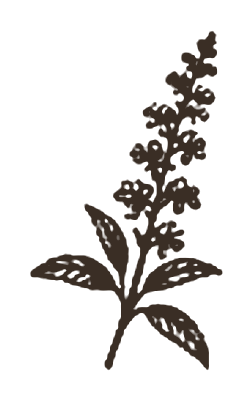
Line drawing of Chaste tree

Chaste. In two languages.

The name promised something. Not everyone believed it.

The name is doubled. Agnos is Greek and castus is Latin. Both mean “chaste”.

Dioscorides, who wrote almost two thousand years ago, explained the name like this: chaste women strewed the plant beneath them at the sacrifices to Ceres. A German textbook from 1938 says that women who wished to stay chaste adorned themselves with the flowers at the festival of Demeter and used the shrub as their bed.

Monks chewed the berries against unwanted desire, and used them instead of pepper. That is why the plant is also called monk’s pepper.

But in 1737 an English herbal wrote that the seed had been dropped from the lists of medicines as useless. In 1812 another wrote that nobody pays any attention to it now.

The name stuck.

The plant

A shrub that likes water and sun.

Chaste tree is a shrub or small tree that can grow six metres tall. The leaves are arranged like fans, with up to nine oblong leaflets. They look like hemp leaves, but have no teeth along the edge. The flowers are small, fragrant and lilac, and grow in clusters.

The fruits are small, hard and reddish-black to black, up to half a centimetre, with four aromatic seeds. They taste sharp and peppery. They are picked in October and November, when they are completely dark. Many people call them berries.

The plant grows wild around the Mediterranean, including Morocco, Algeria and Tunisia, and in western and central Asia. The EU writes that it also grows in parts of India. The American plant database GRIN does not list India. The plant thrives along rivers and coasts. In Norway it is barely hardy enough to grow, and ripe seeds cannot be expected.

Older sources place it in the verbena family. Today it is counted in the mint family.

The wrong plant in the bag

Same name. Not always the same plant.

What is actually in the bag?

Europe has a clear requirement. The pharmacopoeia, the official book on the quality of medicines, specifies whole, ripe, dried fruits with at least 0.08 per cent casticin.

Even so, the sources do not agree on which part is used. The EU and the pharmacopoeia say the fruit. The American pages from NCCIH and LiverTox write that extracts are made from the leaves, stems, flowers and seeds.

In 2014 researchers measured the substances in 17 dietary supplements from Japan and the United States. The amounts of the two marker substances, agnuside and casticin, varied enormously from product to product. In about half, the ratio between them was closer to that found in another Vitex species, Vitex negundo.

In 2019 researchers tested 11 products in Japan that claimed to contain chaste tree. One dietary supplement was probably mixed with Vitex negundo. In two of them they found no agnuside, no casticin, or neither. The authors write that many dietary supplements are of poor quality or of the wrong origin.

Both studies compared the dietary supplements with a medicine developed in Japan. The first authors of both worked for the Japanese pharmaceutical company Zeria, which sells the chaste tree medicine Prefemin in Japan. The 2019 study declares no conflict of interest.

Historical use

From chastity to the cycle.

So who used chaste tree, and for what?

PFAF writes that the plant has been used for thousands of years. The order is not a ranking.

Sexual desire

  • Greece and Rome, antiquity: at the sacrifices to Ceres, chaste women strewed the plant beneath them, according to Dioscorides. Pliny is said to have written that they laid the leaves in their beds, but only while the festival lasted, according to rolv.no.
  • Antiquity, according to the EU report: the seeds were drunk because they were believed to dampen sexual desire.
  • Middle Ages, Europe: monks chewed the berries against unwanted desire.
  • Europe, 1564: Lonicerus recommended the berries and leaves as a remedy against desire. Madaus quotes him.
  • England, 1737 and 1812: the seed had once been used to dampen desire, but now nobody considered it useful.
  • North America, 1898: King’s American Dispensatory writes that the plant is said to repress the sexual passions, and that women in ancient Athens used it in this way. In small doses it is suggested for impotence and “sexual melancholia”.
  • Germany, 1938: Madaus writes that the doctors of the 1800s and 1900s had forgotten the plant. Only the homeopaths used it, as a remedy to stimulate desire and for slackness of the sexual organs.
  • Disagreement: PFAF writes that some sources say it increases desire, others that it dampens it, and that it may work both ways. rolv.no writes that no studies show a purely dampening effect.

Menstruation and milk

  • Greece, around AD 50–70: Dioscorides wrote that the fruit, drunk in wine, can bring in the milk and bring on menstruation.
  • Rome, first century: Pliny wrote of the plant as something that promotes menstruation and milk, according to rolv.no.
  • Middle Ages, Europe: used to bring on menstruation and ease menstrual cramps, according to rolv.no.
  • Europe, 1564: Lonicerus used it to bring on menstruation and to increase milk.
  • England, 1737: Blackwell wrote that it brings on menstruation.
  • North America, 1800s: the eclectic physicians used it for menstrual complaints and to increase milk, according to rolv.no. King’s American Dispensatory calls it galactagogue and emmenagogue, meaning that it increases milk and brings on menstruation.
  • Germany, 1938: Madaus gave the plant to rats, and their heat came later. In some women he found the same: menstruation came several days later.
  • Morocco, 2026: women in Settat boil the seed to bring on menstruation that is late.

Pregnancy and childbirth

  • Greece, 400s BC: Hippocrates is said to have recommended it to stop bleeding after childbirth and to expel the afterbirth, according to rolv.no. Madaus writes something different: for injuries, inflammation and a swollen spleen.
  • Greece, around AD 50–70: Dioscorides wrote that the plant “destroys” offspring. The translator adds: birth control. He also wrote that a decoction is used in sitz baths for complaints and inflammation around the womb.
  • India, Ayurveda: the seed is called abortifacient, write Kirtikar and Basu.

Spleen, liver and dropsy

  • Greece, around AD 50–70: Dioscorides: the fruit drunk for complaints of the spleen and for dropsy, which is fluid in the body.
  • Europe, 1564: Lonicerus used it for dropsy and for diseases of the liver and spleen.
  • England, 1737 and 1812: for a hard liver and spleen (Blackwell) and for obstructions of the liver (Hill).
  • India, Unani: the seeds are said to purify the brain and the liver, and are used for inflammation, pain, dropsy and an enlarged spleen.
  • Morocco, 2023: the fruit is applied as a poultice for hepatitis and jaundice.

Head, sleep and mind

  • Greece, around AD 50–70: Dioscorides wrote that the plant rubbed on the head brings deep sleep, and that as a poultice it dissolves headaches. With vinegar and oil it was poured over the lethargic and the mentally ill.
  • Greece, as Madaus quotes it: the fruit affects the head and causes dizziness. It does not say this in the translation we have read.
  • Europe, 1564: in too large doses they “weaken the head” and make one sleepy, writes Lonicerus, as quoted by Madaus.
  • North America, 1898: King’s American Dispensatory suggests it for sexual irritability with nervousness, melancholia or mild dementia.
  • England, 1931: Grieve: a tincture of the fresh berries for paralysis, pains in the limbs and weakness.

Snakebite and poison

  • Greece, around AD 50–70: Dioscorides: the fruit drunk for snakebite. The leaves, smoked or strewn about, were meant to drive away venomous creatures.
  • India: several old texts recommend the plant for snakebite and scorpion stings. Two researchers found that it does not work as an antidote, according to Kirtikar and Basu.

Stomach, eyes and other uses

  • Middle Ages, Europe: for wind, constipation, fever and hangovers, according to rolv.no.
  • India, Ayurveda: the seed is warming and strengthens the stomach, increases urine and works as an antidote, and is used for itching, burning and thirst.
  • Baluchistan, Pakistan: a bath in water in which the leaves have been boiled, for pains after a chill. For eye disease and stomach ache. Seeds boiled in ghee were given to horses for colic.
  • The Mediterranean and the Middle East: the fruit has been used as pepper, and it is one of the ingredients in the Moroccan spice blend ras el hanout.

China

  • China: a Chinese review from 2005 writes that chaste tree is used in Europe. Chinese folk medicine uses other species of the same genus, such as Vitex negundo and Vitex trifolia.

Complaints before menstruation are not named in the older sources we read. Menstruation is there: bringing it on, and in Madaus delaying it. Even so, the EU report writes that the fruit has been used for centuries for complaints before menstruation. As a medicine, tinctures have been on the market in Austria since 1968 and in Germany since 1976, according to the same report. rolv.no writes that the plant has been used for gynaecological complaints for at least 2,500 years.

Can be used for

Complaints before menstruation. On tradition and one study.

The authorities do not name exactly the same things.

  • EU: two approvals. One covers one specific dry extract, for the treatment of PMS. It rests on one study. The other is a traditional remedy for mild complaints in the days before menstruation, and rests on long-standing use only.
  • Germany: an irregular menstrual cycle, complaints before menstruation and pain in the breasts. With tense breasts or menstrual disturbances, a doctor should make the diagnosis first, writes Commission E.
  • Canada: complaints before menstruation, an irregular cycle and hot flushes in the menopause.
  • PharmaWiki: PMS and disturbances in the rhythm of menstruation, for example after the contraceptive pill.
  • Experience: rolv.no mentions all kinds of menstrual complaints, PMS, sore breasts, hot flushes, too little breast milk and acne. In men it mentions impotence, involuntary loss of semen and prostate complaints.

All three authorities mention complaints before menstruation.

None of them promises a quick effect. The EU recommends use for more than three months for the extract. Canada says at least three months, and rolv.no says the same for PMS.

Who it suits

Women with complaints before menstruation. Not for everyone.

The fruit is approved for complaints before menstruation. But who does it suit?

Who can use it

  • The authorities: adult women aged 18 and over with complaints before menstruation, says the EU. Canada gives a dose only for adults aged 18 and over.
  • Experience: rolv.no mentions women with menstrual complaints and menopausal complaints, and teenagers with hormonal spots.
  • Research: most studies have been done in women with complaints before menstruation. The EU report describes only a few short trials in healthy men.

Who it doesn’t suit

  • Pregnant women: the EU advises against it. There are no data from pregnant women, and the animal studies say too little. The WHO says it should not be used in pregnancy. Canada says the same, also if you are trying to get pregnant, unless you have talked to a health professional.
  • Breastfeeding women: the EU advises against it, because a risk to the baby cannot be ruled out. LactMed says it should be avoided while breastfeeding.
  • Under 18: the EU advises against it, because there are not enough data.
  • Hormone-sensitive cancer: the EU asks anyone who has or has had oestrogen-sensitive cancer to talk to a doctor first. NCCIH writes that it may be unsafe with cancer of the breast, womb or ovaries.
  • Disorders of the pituitary gland: the EU asks people to talk to a doctor first. The plant can mask the symptoms of a tumour of the pituitary gland that produces prolactin.
  • Medicines: the EU asks people to talk to a doctor first if they take medicines that act on dopamine, or oestrogens and anti-oestrogens. The WHO, Canada and LiverTox mention the contraceptive pill and hormone therapy. The Australian medicines regulator TGA has received a report of an unintended pregnancy after use together with a progestogen-only pill.
  • Allergy: the EU writes that hypersensitivity is the only contraindication. Severe allergy with swelling of the face and difficulty breathing has been reported.

Where the sources disagree

  • Pregnancy: the EU, the WHO, Canada and LiverTox advise against it. rolv.no writes that it may only be used early in pregnancy, if the body makes too little progesterone, and that it may then protect against miscarriage in the first three months. Dugoua and colleagues write that the evidence is poor. They point to laboratory experiments and expert opinion that the plant may act like oestrogen and progesterone, make the womb contract and prevent miscarriage.
  • Breastfeeding: rolv.no writes that there is no danger while breastfeeding, and that small doses increase the milk. It also writes that long use can make breastfeeding stop, and that one can quickly become fertile again. LactMed, the EU and the WHO advise against it.
  • Age: the WHO says not under 12. The EU says not under 18. rolv.no mentions teenagers with spots.
  • Germany: Commission E lists no known contraindications.

What’s in the plant

Many substances. No leading role.

What is in the fruits?

  • Essential oil: about 1.2 per cent, according to rolv.no.
  • Casticin: a flavonoid, a large group of plant substances. The pharmacopoeia requires at least 0.08 per cent in the fruit, and the substance is used to measure quality.
  • Agnuside and aucubin: iridoid glycosides. rolv.no gives about 0.6 and 0.3 per cent.
  • Diterpenes: among them rotundifuran and vitexilactone.
  • Fatty acids, alkaloids and coumarins: mentioned by rolv.no.

Which substance works?

Nobody knows.

Several substances. The question is which one does something.

The EU writes that it is not known how the plant works. LiverTox writes that the active ingredient is unknown. rolv.no holds that it is probably not one substance, but several that work together.

In the laboratory the extract binds to dopamine receptors. These are docking points for dopamine, a signalling substance in the brain. The extract also dampens the release of prolactin, a hormone that among other things controls milk. In 2003 Wuttke and colleagues pointed to diterpenes called clerodadienols as the most important. In 2024 other researchers tested one extract on hamster cells that had been given the human docking point for dopamine. The diterpene viteagnusin I was the strongest of the diterpenes, followed by rotundifuran. Vitexilactone had no effect. Another substance, 3-epi-maslinic acid, was stronger than all the diterpenes.

In humans it is unclear. The EU writes that it has not been proven that chaste tree lowers high prolactin. In a study of 20 healthy men, the lowest dose raised prolactin, while higher doses lowered it. On oestrogen, too, the results conflict: some found that the extract binds to oestrogen receptors, others did not.

An extract is not one substance. It is what people have used.

What the research says

One study carries the approval.

What happens when people actually take chaste tree?

In 2001, 178 women with PMS took part. They received either one specific dry extract or placebo for three cycles, and 170 were included in the results. In 52 per cent of those given the extract, their complaints were at least halved, against 24 per cent on placebo. The manufacturer, Zeller AG, supplied the medicine and paid for the study. The EU committee called it well conducted. It is the basis for the EU approval of this one extract.

In 2018 the EU committee adopted the monograph by 18 of 23 votes. The members from Finland, Ireland, Italy, the Netherlands and the United Kingdom disagreed. All five held that the data were not good enough. The Norwegian member agreed with the opinion.

The EU committee reviewed many other studies. Most lack a group given placebo. Several also do not state which extract was used. For sore breasts, an Iranian study of 159 women found less pain than with placebo, but the EU committee considered the study short and the extract not described.

The reviews disagree. In 2017 a meta-analysis found a large combined effect on PMS. The authors nevertheless wrote that the risk of bias was high, that the studies were too different, and that there is a risk that studies without findings go unpublished. The effect may therefore be overestimated. In 2019 another meta-analysis found that only 3 of 21 studies met the requirements. These three, with 520 women, showed that women who took chaste tree were 2.6 times more likely to improve. The authors wrote that most of the other studies cannot be used as evidence, because they are poorly described.

In short: people in the studies say they get better. Those who assess the studies disagree on how far they can be trusted.

Questions people ask

Does chaste tree give more milk, or less?

Both have been written.

Dioscorides wrote almost two thousand years ago that the plant can bring in the milk. LactMed writes that low doses raise prolactin, and that the plant is called a galactagogue, something that increases milk, but that no valid studies support this. High doses may lower prolactin and possibly the milk. In Persian traditional medicine the plant was used against too much milk. The EU report found no controlled studies on milk.

In a rat study, milk production was suppressed and many pups died. Dugoua and colleagues write that experts disagree on whether the plant increases or decreases milk.

Does it dampen desire?

The name says yes. The sources are less sure.

rolv.no writes that no studies show that the fruit purely dampens desire. It rather works as a regulator. PFAF writes the same. As early as 1737 Blackwell wrote that people had stopped using the seed for this.

Is it safe?

Mostly, say the sources. But some things have not been tested.

The EU lists possible side effects: allergy, acne, headache, dizziness, nausea, stomach pain and menstrual disturbances. It writes that it does not know how often they occur. rolv.no writes that side effects are rarely reported, in fewer than 2 per cent.

In two rat studies, of 4 and 26 weeks, the researchers saw signs of liver damage. The EU committee regarded this as a signal, but did not include it in the warnings, because it has not been seen in humans. LiverTox gives chaste tree likelihood score E for liver injury, meaning an unlikely cause.

The EU also writes that the plant has not been tested for damage to genetic material. That is why it cannot be entered on the EU list of traditional herbal medicines. Nor has it been tested for whether it can cause cancer.

The name said chaste. The use went in many directions.

Sources

Authorities and monographs

  • EMA/HMPC, overview page for Vitex agnus-castus, fructus (Agni casti fructus). ema.europa.eu
  • EMA/HMPC, EU monograph on Vitex agnus-castus L., fructus, revision 1, 2018. ema.europa.eu
  • EMA/HMPC, assessment report on Vitex agnus-castus L., fructus, revision 1, 2018. ema.europa.eu
  • EMA/HMPC, opinion on the monograph, revision 1, 2018. ema.europa.eu
  • Commission E, chaste tree fruit, 1985 and 1992. herbalgram.org
  • WHO Monographs on Selected Medicinal Plants, vol. 4, 2009, Fructus Agni Casti. iris.who.int
  • Health Canada, monograph on chaste tree, 2024. hc-sc.gc.ca
  • TGA (Australia), safety advisory on Vitex agnus-castus and oral contraceptives, 2019. tga.gov.au
  • PharmaWiki, Mönchspfeffer. pharmawiki.ch
  • NIH LactMed, chasteberry. ncbi.nlm.nih.gov
  • NIH LiverTox, chaste tree. ncbi.nlm.nih.gov
  • NIH NCCIH, chasteberry. nccih.nih.gov

Tradition and the plant

  • Dioscorides, De Materia Medica, book 1 chapter 135, translated by Osbaldeston, 2000. archive.org
  • Madaus, Lehrbuch der Biologischen Heilmittel, 1938, “Agnus castus”. Henriette’s Herbal
  • Blackwell, A Curious Herbal, 1737–39, no. 139. Henriette’s Herbal
  • Hill, The Family Herbal, 1812. Henriette’s Herbal
  • King’s American Dispensatory, 1898. Henriette’s Herbal
  • Grieve, A Modern Herbal, 1931. botanical.com
  • Kirtikar and Basu, Indian Medicinal Plants, vol. 3. archive.org
  • Benkhnigue et al. 2023, plants for liver disease in Al-Haouz Rehamna, Morocco. ethnobotanyjournal.org
  • Chebabe et al. 2026, plants used by women in Settat, Morocco. biomedpharmajournal.org
  • Li et al. 2005, review of the genus Vitex, Chinese Traditional and Herbal Drugs. tiprpress.com
  • Hong Kong Polytechnic University, Chinese Herbal Medicine Database, Shrub Chastetree Fruit (蔓荊子). herbaltcm.sn.polyu.edu.hk
  • GRIN-Global, Vitex agnus-castus, distribution. npgsweb.ars-grin.gov
  • Urtekilden (Norwegian herb site), chaste tree. rolv.no
  • Plants For A Future, Vitex agnus-castus. pfaf.org

Adulteration

  • Fukahori et al. 2014 (quality of products from Japan, Europe and the United States). Europe PMC
  • Sogame et al. 2019 (quality of products in Japan). J-STAGE
  • Yakuji Nippo 2014, Zeria launches Prefemin in Japan. yakuji.co.jp

Research

  • Schellenberg 2001 (PMS, placebo). PMC
  • Verkaik et al. 2017 (meta-analysis, PMS). Europe PMC
  • Csupor et al. 2019 (meta-analysis, PMS). Europe PMC
  • Dugoua et al. 2008 (pregnancy and breastfeeding). Europe PMC
  • Wuttke et al. 2003 (mode of action and substances). Europe PMC
  • Reinhardt et al. 2024 (diterpenes and triterpenes at the dopamine receptor). Europe PMC